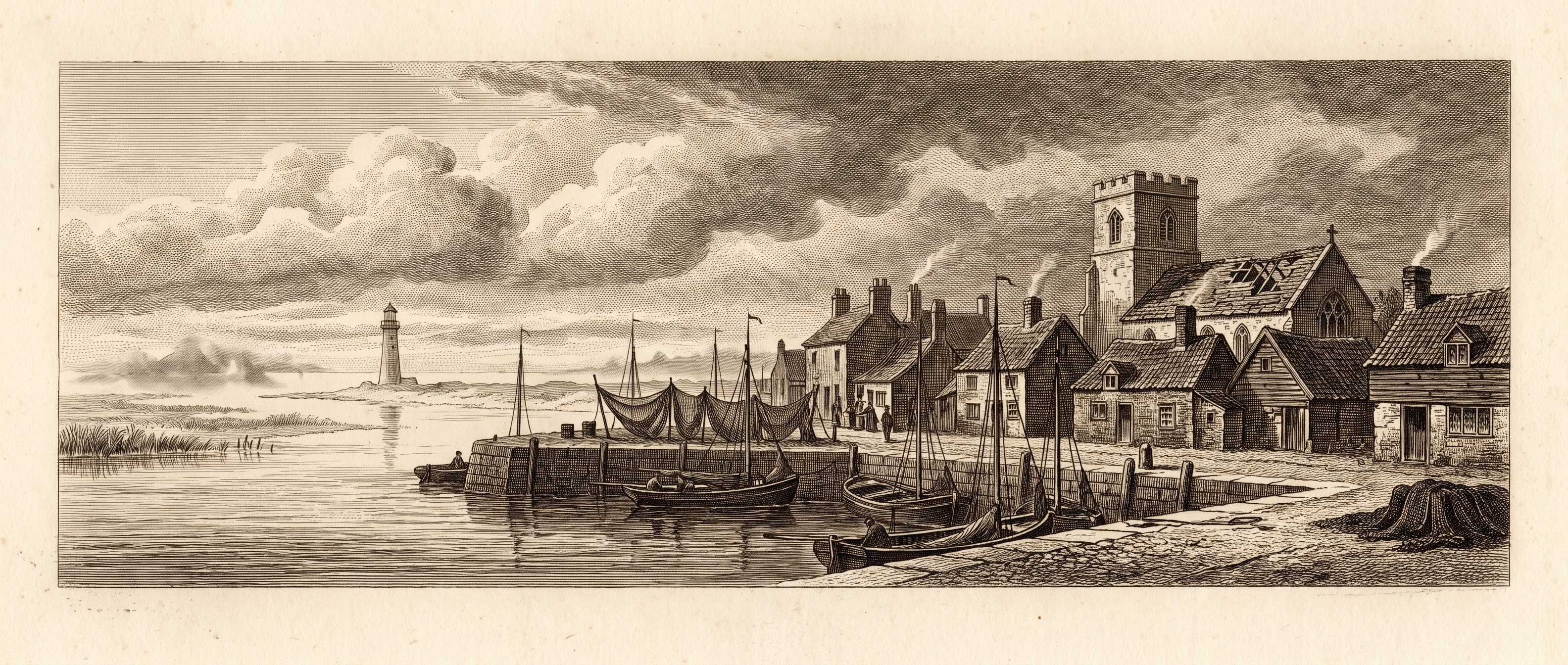
Brindlemere does not exist. It never has. The town — its 38 residents, its harbor and chapel and public house — is a deterministic simulation: a mechanical system of weather, work, money, and acquaintance, wound up with the seed 1873 and let run for seven days. Run it again and precisely the same week unfolds: the same gale on the Tuesday night, the same nets cut, the same confession on the Saturday morning.
The simulation produces an event log — plain, dated, mechanical sentences recording what happened, where, and to whom. Money moves in integer shillings. The tide comes fifty minutes later each day. Some events are public; some the paper knows of only in outline.
The journalism is written by a machine — a small language model (deepseek-v4-flash, playing the part of Mr. Aldous Gale, editor) given each day's log and the biographies of those concerned, under one absolute rule: it may phrase, it may not invent. Every article cites the event ids it was written from, and you may check its honesty yourself — beneath each story sits a small clasp reading “written from N simulation events”. Open it and compare the copy against the record.
That inversion is the point of the experiment. Generative fiction usually asks you to trust it; here the world is the source of truth and the model is only its reporter. The paper is the pretty part. The receipts are the interesting part.
The week was computed once, the editions written once, and the whole object is now static: the town costs nothing to keep alive. You can watch each day happen on the town map, follow any resident through the week in the residents' index, or read how the thing was built, decision by decision, at /insights.